Managing Stress in Regards to Class Peer Reviewed Articles
Introduction
The COVID-nineteen pandemic has led to a major shift in communication. Advocacy in technology played a central role in facilitating this shift. People were pushed toward media applications that enable live connection and interaction betwixt individuals, institutions, firms, and even countries. This mode of communication, washed through remote applications, is called telecommunication.
Burnout is a syndrome conceptualized as resulting from chronic workplace stress that has not been successfully managed. Over the past decade, studies exploring stress and burnout in the occupational and educational settings were published extensively. During the COVID-xix pandemic, the workplace setting changed upon lockdown implementation. Advisable jobs shifted to remote working and telecommunications. In addition, teaching shifted to online mode and distance learning. All the same, studies exploring stress and burnout associated with the new norm of increased telecommunication are lacking.
Here, we explore the status of communication and learning earlier and during the COVID-19 pandemic. The intense shift to telecommunication during the outbreak can atomic number 82 to increased levels of stress and exhaustion as a result of increased on-screen time. Improving public awareness on the negative consequences of telecommunication and offering applied solutions to cope with its associated mental health challenges is vital to relieve the tele-burdens of pandemics.
Online Communication in the Era of COVID-xix
Before the COVID-xix pandemic, online communication and learning has been growing steadily worldwide, every bit new digital technologies emerge, and the global adoption of the Internet intensifies. The increased demand for skills that lucifer the rapidly developing digital economy projected that online communication and learning was on rails to become a global miracle and mainstream by 2025 (1).
The pandemic shifted advice substantially from face-to-face to virtual. Business organization meetings, bookish conferences, educational activity, and governmental management were forced to adjust to the challenges and risks that COVID-19 posed. Telecommunication via Skype, Zoom, FaceTime, and Cisco Webex was key in keeping the educational, economic, and health sectors alive and ongoing during the outbreak. Organizations used tele-detailing by means of social media or email to maintain connectivity and communication (2). In addition, telemarketing witnessed a surge in popularity to promote products and connect with customers (2). This shift further necessitated a change in policies and laws that govern communication in some countries. The UK government, for case, temporarily removed the in-person law for local authorities when holding public meetings, facilitating the conduction of meetings remotely (3).
Online Learning and the Covid-19 Pandemic
The online learning that we take today dates to the 1990s, when the Cyberspace and Globe Wide Web started reaching individuals in remote locations and different time zones. This was a major shift from the mid-nineteenth century correspondence courses that started in England and involved sending of hard copy documents between students and university instructors. In the past two decades, advances in communication disrupted the education manufacture and made online education more than feasible technologically, economically, and operationally (4).
The COVID-19 pandemic further accelerated the shift of the education sector toward online learning as gathering of students was forbidden. A loftier demand for massive online open up courses, from providers such equally Coursera and edX, was noted during the lockdown (3, 5). In April 2020, people searched for "free online courses" more than one million times. Searches for applied science courses that upgrade skills and knowledge, such as Microsoft Excel, Python, and coding, increased by 100% (6). To satisfy the demand, Coursera offered certificates for 115 courses for costless (3). Course offerings varied betwixt scientific discipline, philosophy, history, mathematics, and other topics (3). edX too offered a variety of free online courses in partnership with various institutions to teach the history of pandemics, the actions that should exist taken during pandemics, the available treatments for the virus, and how to manage during pandemics (v).
Extended protective measures forced most schools and universities to close their campuses until amend control of the pandemic is achieved. The University of Cambridge, for example, appear that the 2020/2021 academic yr will be fully online (7). Colleges in the Usa responded to the pandemic gradually. Touro College and Stanford University were the outset to denote their shift to online learning in March 2020. Later, 1,400 private and public educational institutions joined, and appear their transition to online learning (8). Some institutions were reluctant to fully endorse online pedagogy straightaway. Harvard University officials, for instance, announced that but some of its schools, such as the schools of pattern, divinity, and public wellness, will behave on-line classes during the Fall 2020 semester (ix). In Mainland china, the Spring 2020 semester was postponed. To cope with the challenges, the Chinese Ministry of Education issued a notice stating that elementary and center schools should be held online. Boosted spider web-based and television resources were provided by the government to specific rural areas where there is a lack of network coverage. Special programs were provided for students to increase their health and public prophylactic education and assist them cope with epidemics (10). In Georgia, learning shifted online in the Spring 2020 semester. Diverse facilities were provided to schools, teachers, and students by Georgia'southward Ministry of Didactics, Scientific discipline, Culture and Sports. A total of 2,086 public schools were equipped with the Microsoft Teams platform and accounts for students and teachers were registered to be able to host virtual classes (11). In Germany, the COVID-nineteen pandemic highlighted hidden challenges in the educational system, which is lagging when information technology comes to digital learning (12). Officials have lately started to provide schools and teachers with web services and email accounts (13). Nevertheless, teachers lack the training needed for proper online education and are uninformed virtually technologies and the German language digital infrastructure (12). In addition, several universities were shocked to know that their system is express with respect to online library access, or the number of simultaneous teleconference participants (12).
Telecommunications, Wellbeing, and Mental Health
The surge in telecommunications led people to spend more than time facing screens, tablets, and smart phones. Previously, the increase in exposure to smart devices and screens has been reported to increment stress and burnout levels. Stress is an emotional, physical, or mental reaction that causes tension (14). Information technology tin result from social, environmental, or psychological situations. Burnout is a mental wellness country that results from work-related distress, involving a continuous reaction to persistent interpersonal stressors. The major factors contributing to burnout are overwhelming burnout, feelings of cynicism, and detachment. In addition, a sense of ineffectiveness and lack of achievement may ensue (xv). Appropriately, occupational burnout is conceptualized every bit a breakdown in the human relationship betwixt people and their work (16).
The relationship between the use of smart devices and stress and burnout has been a topic of interest for researchers worldwide (17). It is frequently contended that exposure to computer and smartphone screens is associated with a plethora of stress-related symptoms (eighteen). These may appear in the form of psychological, cerebral, or musculoskeletal impairments, and may take a toll on the individual'southward quality of life and daily function (19).
Few studies have addressed how stress due to smart devices correlates with social and demographic variables. Some gender-focused studies exploring psychological effects of prolonged use of smartphones reported more depressive symptoms and sleep disturbances among females than males (17, 18). Studies on personality traits showed that extroverted personalities were associated with telecommunications burnout, whereas introverts were found to face stresses resulting from telecommunications more easily (twenty). Age and time too seem to have an effect. Electronic media usage at dark among adolescents was associated with decreased sleep duration and increased depressive symptoms (18). The duration of exposure further impacts levels of stress and anxiety. Visnjic et al. explored smart device use amidst university students and indicated that the intensity and modality of smart device use tin can influence the development of mental health problems in that population (21). Specially, it was shown that feet is more mutual in younger students, those who transport more text messages, and those who browse the cyberspace less frequently (21). Stress was found to be more prevalent in students who spend longer times per day talking on the telephone (21). Khouja et al. further confirmed that increased computer usage among teenagers is associated with increased feet levels (22). Madhav et al. showed that increased online activity among a cohort of 3,201 US students was associated with moderate-to-severe depression (23). Excessive use of e-mails might likewise be an antecedent for employee burnout. E-mail overuse tin can cause information overload, while the stress related to continuously answering e-mails may exist an antecedent of exhaustion (24–26).
It is worth noting that the furnishings of prolonged exposure to telecommunication can as well touch on physical health. Observing screens and hunching over smartphones for extended periods of fourth dimension leads to physical harm. Fares et al. found neck pain to be a prominent problem amidst boyish and pediatric users, mainly due to the prolonged and distorted positioning when using these devices (27). Specifically, bending the neck when using digital screens and smartphones may progressively pb to stresses on the cervical spine; a condition known as "iHunch." It may also strain the ligaments, muscles, and tendons of the vertebral column (27, 28).
Other Stressful Factors During Pandemics
Pandemics are often associated with a country of stress and panic. Accordingly, strain resulting from telecommunications can accrue with other stressors to lead to exhaustion, feet, and burnout. During the COVID-nineteen outbreak, imposed lockdowns and compulsory quarantines increased levels of tension (29). The inability to socialize, nourish gatherings and interact with others enhanced separation anxiety, boredom, and suicidal thoughts, and every bit such, these emotions were reported more than often (29). Brooks et al. showed that people who spent more than 10 days in quarantine were more likely to report posttraumatic stress symptoms (29).
The elderly, teens, healthcare providers, and individuals with pre-existing mental wellness problems became more susceptible to stress and burnout. Symptoms in elderly manifested as changes in eating habits, disturbed slumber cycles, increased intake of tobacco and alcohol, and difficulty in concentrating (xxx). The closing of schools and educational institutions and the shift in learning to online methods disrupted the lives of students (31, 32). Exams were postponed or canceled, graduation ceremonies were halted, and learning objectives were shifted. This took a heavy toll on the psychological well-being of students worldwide. The shift in utilization of healthcare resources toward illness containment and prevention sidelined many medical weather in the process (33). In the case of patients with mental health problems, this manifested as an aversion toward seeking aid, an adjournment of psychiatric appointments, or a shortage in supplying mental health medications (33).
The lockdown negatively affected many sectors through delaying promotions, cut wages, and/or chore termination. Many institutions were forced to limit their working chapters or stop working completely, and this had a negative socioeconomic impact on employees, employers, and national economies (34). Later on, pressure level and feet levels increased among afflicted individuals, who had to worry about both the pandemic and the burden of providing for themselves and their families during challenging times.
Recommendations
Adopting coping strategies that are practical and applicable during online sessions tin decrease the hazard of psychological distress and preserve wellness and well-being (Figure 1).
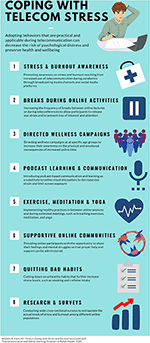
Effigy one. An infographic presenting the coping strategies to be adopted during extended online activities and learning sessions.
As such, several measures must be taken to increase public mindfulness regarding the psychological repercussions of telecommunications. In add-on, health strategies demand to be adopted to help the public cope with ascension stress and burnout levels during pandemics. Here, we suggest the following:
one. Promoting awareness on stress and burnout resulting from increased utilize of telecommunication during pandemics through broadcasting media channels and social media platforms.
Conventional media must admit stress and burnout related to the pandemic and provide evidence-based data on prevalence and coping mechanisms to the general public. Social media will eventually selection upward this information and volition facilitate its quick sharing amid the public (35).
ii. Increasing the frequency of breaks between online lectures or during teleconferences to allow participants to release middle strain and to prevent loss of interest and attention.
Digital heart strain is an emerging public health consequence that results from the continuous employ of digital devices. Contradistinct blinking patterns, excessive exposure to intense lite, closer working distance, and smaller font size are factors associated with telecommunications through tablets and digital screens that can pb to center strain and its subsequent effects. Maintaining a normal blinking charge per unit and using bogus tears tin help in the management of digital eye strain (36). Increasing breaks between online sessions can also release accumulating tension and maintain interest and attending.
3. Directing wellness campaigns at students to increase their awareness on the physical and emotional consequences of increased online fourth dimension.
Leading awareness campaigns directed at specific age groups while considering cultural and indigenous differences can help increase compliance to healthy online habits. Campaigns presented by part models can catch attention and induce behavioral change. Television personalities, film stars, and famous athletes have all been shown to touch certain decisions of adolescents (37). Having these entertainers or athletes endorse awareness campaigns may influence people'southward attitudes and intentions when information technology comes to telecommunications.
four. Introducing podcast-based communication and learning equally a substitute to online visual encounters to decrease centre strain and limit screen exposure.
Podcasts are episodic digital audio recordings that are downloaded through spider web syndication or streamed online (38). In medical pedagogy, they take gained widespread popularity compared to other media resources (39), as they possess the potential to facilitate advice between researchers, policymakers, and the public. The cosmos of a learning podcast is an attractive way to provide asynchronous pedagogy because the bulwark to entry is low and the resources needed are readily available and cheap (forty). More importantly, podcasts substitute eyes for ears, easing the strain and stress that tin can outcome from prolonged visual fixation on screens and tablets.
five. Implementing healthy practices in betwixt online sessions and during extended meetings, such as breathing exercises, meditation, and yoga.
There is growing testify that yoga is an effective multi-component wellness intervention that reduces stress, increases concrete activity and improves well-being (41–45). Clinical studies provide preliminary back up for the effectiveness of yoga as an adjunct treatment for a range of chronic conditions such as low (46, 47) and anxiety (48). In addition, psychological mechanisms such equally enhanced self and trunk awareness, coping, mindfulness, self-compassion, and social connectedness may underlie healthier lifestyle choices and more than adaptive responses to stressors (49). Therefore, adopting such healthy practices can help in coping with stress and exhaustion resulting from telecommunication.
half-dozen. Providing online participants with the opportunity to share their feelings and mental struggles so that proper help and back up tin can be administered.
Professionals partaking in online communities must be proactive in using online platforms to share their feelings and experiences with telecommunication. Through these online communities, users might limited emotions and provide tips on how they cope with stress and burnout resulting from prolonged online activeness. For case, preschool teachers, using online learning communities, improved their noesis on mental health bug past sharing and discussing experiences related to mental health with others in these online spaces (50).
7. Cutting downward on unhealthy habits that further increase stress levels, such as smoking and caffeine intake.
An online survey of 957 smokers in kingdom of the netherlands reported that xviii.nine% reported smoking more in May 2020 (51). Severely stressed smokers were fifty-fifty more probable to have increased smoking beliefs during the pandemic. Smoking has been linked to low, anxiety, suicidal thoughts, and weak learning outcomes (52). Caffeine intake may also increase mental health disorders, such as feet (53). Cutting down on these bad habits can subtract their additive result on online-associated stress and burnout.
eight. Conducting broad cross-sectional surveys to extrapolate the actual levels of stress and burnout among different online populations.
Studying epidemiological patterns and trends related to telecommunication and its associated stress and burnout can help united states decipher the risk factors and protective mechanisms that can be studied and highlighted. Furthermore, efforts should be dedicated to fund health advice research (54–56). This volition contribute to the advancement of improve ways of communication betwixt the different components of the wellness sector and, subsequently, improve public health and individual well-being.
Conclusion
Recognizing stress and burnout resulting from telecommunications during pandemics is necessary to develop effective mitigation strategies. Inquiry conducted on stress and burnout during the COVID-nineteen pandemic mainly focused on physicians, nurses, and other healthcare workers (57–61). Screening and surveying studies exploring stress and burnout levels amid the general population or other vulnerable groups are lacking. Despite many reports of association between the use of smart devices and mental and psychological consequences, the evidence to this merits remains equivocal. Some studies in the literature report benefits garnered from the utilise of cellphones and describe it every bit a tool for coping with stress rather than causing it (62, 63). Consequently, it is not possible to summarize the human relationship between smart device use and stress or draw conclusions on their clan. Smart devices have grown in popularity to become an integral office of every household, and accordingly, research on its furnishings is necessary to be able to reap the benefits of this technology in a safe and healthy manner.
Writer Contributions
NM, MF, and JF conceived the report, collected data, and prepared information presentation. All authors wrote, reviewed, and canonical the concluding version of the manuscript.
Conflict of Interest
The authors declare that the research was conducted in the absence of whatsoever commercial or financial relationships that could exist construed as a potential conflict of involvement.
References
ane. Kumar A, Kumar P, Palvia SCJ, Verma South. Online education worldwide: electric current status and emerging trends. J Inf Technol Instance Appl Res. (2017) 19:3–9. doi: 10.1080/15228053.2017.1294867
CrossRef Full Text | Google Scholar
4. Palvia S, Aeron P, Gupta P, Mahapatra D, Parida R, Rosner R, et al. Online pedagogy: worldwide status, challenges, trends, and implications. J Glob Inf Technol Manag. (2018) 21:233–41. doi: 10.1080/1097198X.2018.1542262
CrossRef Full Text | Google Scholar
eight. Marsicano C, Felten Grand, Toledo L, Buitendorp Grand. Tracking campus responses to the COVID-19 pandemic. APSA Preprints. (2020). doi: 10.33774/apsa-2020-3wvrl. [Epub alee of impress].
CrossRef Full Text | Google Scholar
10. Zhou L, Wu S, Zhou M, Li F. 'Schoolhouse's out, only form' on', the largest online educational activity in the world today: taking China'south practical exploration during the COVID-nineteen epidemic prevention and control as an example. Best Evid Chin Educ. (2020) four:501–19. doi: 10.15354/bece.xx.ar023
CrossRef Total Text | Google Scholar
eleven. Basilaia Chiliad, Kvavadze D. Transition to online educational activity in schools during a SARS-CoV-2 coronavirus (COVID-19) pandemic in Georgia. Pedagological Res. (2020) 5:7937. doi: 10.29333/pr/7937
CrossRef Full Text | Google Scholar
12. Kerres G. Against all odds: education in Germany coping with Covid-xix. Postdigit Sci Educ. (2020). doi: 10.1007/s42438-020-00130-7. [Epub alee of print].
CrossRef Full Text | Google Scholar
15. Maslach C, Leiter MP. New insights into burnout and health care: strategies for improving civility and alleviating exhaustion. Med Teach. (2017) 39:160–3. doi: x.1080/0142159X.2016.1248918
PubMed Abstract | CrossRef Full Text | Google Scholar
16. Due west CP, Dyrbye LN, Erwin PJ, Shanafelt TD. Interventions to forestall and reduce doctor exhaustion: a systematic review and meta-assay. Lancet. (2016) 388:2272–81. doi: ten.1016/S0140-6736(xvi)31279-X
PubMed Abstract | CrossRef Total Text | Google Scholar
18. Lemola S, Perkinson-Gloor North, Brand S, Dewald-Kaufmann JF, Grob A. Adolescents' electronic media use at night, sleep disturbance, and depressive symptoms in the smartphone age. J Youth Adolesc. (2015) 44:405–18. doi: x.1007/s10964-014-0176-x
PubMed Abstract | CrossRef Full Text | Google Scholar
20. Meymandpour R, Bagheri Z. A study of personality traits, viz., extraversion and introversion on telecommuters' burnout. Telecom Concern Rev. (2017) 10:1–vii.
Google Scholar
21. Višnjić A, Veličković V, Sokolović D, Stanković M, Mijatović Thousand, Stojanović G, et al. Relationship between the manner of mobile phone apply and depression, feet, and stress in academy students. Int J Environ Res Public Health. (2018) 15:697. doi: 10.3390/ijerph15040697
PubMed Abstract | CrossRef Full Text | Google Scholar
22. Khouja JN, Munafò MR, Tilling K, Wiles NJ, Joinson C, Etchells PJ, et al. Is screen time associated with anxiety or depression in young people? Results from a United kingdom of great britain and northern ireland birth cohort. BMC Public Health. (2019) 19:82. doi: 10.1186/s12889-018-6321-nine
CrossRef Total Text | Google Scholar
24. Barley SR, Meyerson DE, Grodal Due south. Electronic mail as a source and symbol of stress. Organ Sci. (2011) 22:887–906. doi: 10.1287/orsc.1100.0573
CrossRef Full Text | Google Scholar
25. Day A, Paquet S, Scott North, Hambley Fifty. Perceived information and communication technology (ICT) demands on employee outcomes: the moderating effect of organizational ICT support. J Occup Health Psychol. (2012) 17:473. doi: x.1037/a0029837
PubMed Abstruse | CrossRef Full Text | Google Scholar
29. Brooks SK, Webster RK, Smith LE, Woodland Fifty, Wessely S, Greenberg N, et al. The psychological impact of quarantine and how to reduce it: rapid review of the testify. Lancet. (2020) 395:912–20. doi: 10.1016/S0140-6736(twenty)30460-8
PubMed Abstract | CrossRef Full Text | Google Scholar
31. Viner RM, Russell SJ, Croker H, Packer J, Ward J, Stansfield C, et al. School closure and direction practices during coronavirus outbreaks including COVID-19: a rapid systematic review. Lancet Child Adolesc Health. (2020) 4:397–404. doi: ten.1016/S2352-4642(20)30095-X
PubMed Abstract | CrossRef Full Text | Google Scholar
32. Ahmed H, Allaf One thousand, Elghazaly H. COVID-19 and medical education. Lancet Infect Dis. (2020) 20:777–8. doi: ten.1016/S1473-3099(twenty)30226-7
CrossRef Total Text | Google Scholar
33. Giallonardo V, Sampogna Chiliad, Del Vecchio 5, Luciano K, Albert U, Carmassi C, et al. The touch of quarantine and physical distancing post-obit COVID-19 on mental health: study protocol of a multicentric italian population trial. Front Psychiatr. (2020) 11:533. doi: 10.3389/fpsyt.2020.00533
PubMed Abstruse | CrossRef Full Text | Google Scholar
34. Nicola M, Alsafi Z, Sohrabi C, Kerwan A, Al-Jabir A, Iosifidis C, et al. The socio-economical implications of the coronavirus and COVID-xix pandemic: a review. Int J Surg. (2020) 79:thirteen–4. doi: 10.1016/j.ijsu.2020.04.018
CrossRef Full Text | Google Scholar
35. Mheidly Northward, Fares J. Leveraging media and health communication strategies to overcome the COVID-nineteen infodemic. J Public Health Policy. (2020). doi: ten.1057/s41271-020-00247-west. [Epub ahead of print].
PubMed Abstract | CrossRef Total Text | Google Scholar
37. Martin CA, Bush-league AJ. Do role models influence teenagers' purchase intentions and beliefs? J Consum Marker. (2000) 17:441–53. doi: ten.1108/07363760010341081
CrossRef Full Text | Google Scholar
38. Lichtenheld A, Nomura Yard, Chapin Due north, Burgess T, Kornegay J. Development and implementation of an emergency medicine podcast for medical students: EMIGcast. West J Emerg Med. (2015) 16:877. doi: 10.5811/westjem.2015.ix.27293
CrossRef Full Text | Google Scholar
39. Cadogan Thou, Thoma B, Chan TM, Lin M. Gratis open access meducation (FOAM): the ascension of emergency medicine and disquisitional intendance blogs and podcasts (2002–2013). Emerg Med J. (2014) 31:e76–7. doi: 10.1136/emermed-2013-203502
CrossRef Full Text | Google Scholar
40. Berk J, Watto M, Williams P. Twelve tips for creating a medical education podcast. Med Teach. (2020) 16:1–7. doi: 10.1080/0142159X.2020.1779205
CrossRef Total Text | Google Scholar
41. Pascoe MC, Bauer IE. A systematic review of randomised command trials on the effects of yoga on stress measures and mood. J Psychiatr Res. (2015) 68:270–82. doi: 10.1016/j.jpsychires.2015.07.013
CrossRef Full Text | Google Scholar
42. Büssing A, Michalsen A, Khalsa SBS, Telles S, Sherman KJ. Effects of yoga on mental and physical wellness: a short summary of reviews. Evid Based Complement Alternat Med. (2012) 2012:165410. doi: 10.1155/2012/165410
CrossRef Full Text | Google Scholar
44. Fares J, Al Tabosh H, Saadeddin Z, El Mouhayyar C, Aridi H. Stress, burnout and coping strategies in preclinical medical students. N Am J Med Sci. (2016) 8:75–81. doi: 10.4103/1947-2714.177299
PubMed Abstract | CrossRef Full Text | Google Scholar
45. Fares J, Saadeddin Z, Al Tabosh H, Aridi H, El Mouhayyar C, Koleilat MK, et al. Extracurricular activities associated with stress and burnout in preclinical medical students. J Epidemiol Glob Wellness. (2016) half-dozen:177–85. doi: 10.1016/j.jegh.2015.x.003
PubMed Abstract | CrossRef Full Text | Google Scholar
48. Cramer H, Lauche R, Anheyer D, Pilkington Thousand, de Manincor G, Dobos G, et al. Yoga for anxiety: a systematic review and meta-analysis of randomized controlled trials. Depress Anxiety. (2018) 35:830–43. doi: ten.1002/da.22762
PubMed Abstruse | CrossRef Full Text | Google Scholar
49. Riley KE, Park CL. How does yoga reduce stress? A systematic review of mechanisms of change and guide to time to come research. Wellness Psychol Rev. (2015) nine:379–96. doi: ten.1080/17437199.2014.981778
PubMed Abstract | CrossRef Full Text | Google Scholar
50. Chen D, Zhang R, Liu M, Hou L. Knowledge discovery from posts in online health communities using unified medical language system. Int J Environ Res Public Health. (2018) 15:1291. doi: 10.3390/ijerph15061291
PubMed Abstract | CrossRef Full Text | Google Scholar
51. Bommele J, Hopman P, Walters BH, Geboers C, Croes East, Fong Gt, et al. The double-edged relationship between COVID-xix stress and smoking: implications for smoking abeyance. Tob Induc Dis. (2020) 18:63. doi: 10.18332/tid/125580
PubMed Abstract | CrossRef Full Text | Google Scholar
52. Slomp FM, Bara TS, Picharski GL, Cordeiro ML. Association of cigarette smoking with anxiety, depression, and suicidal ideation amid Brazilian adolescents. Neuropsychiatr Dis Treat. (2019) 15:2799. doi: 10.2147/NDT.S217069
PubMed Abstruse | CrossRef Total Text | Google Scholar
53. O'Neill CE, Newsom RJ, Stafford J, Scott T, Archuleta S, Levis SC, et al. Adolescent caffeine consumption increases adulthood anxiety-related beliefs and modifies neuroendocrine signaling. Psychoneuroendocrinology. (2016) 67:40–50. doi: 10.1016/j.psyneuen.2016.01.030
PubMed Abstract | CrossRef Full Text | Google Scholar
54. Mheidly N, Fares J. Wellness communication research in the Arab world: a bibliometric assay. Integrat Healthcare J. (2020) 2:e000011. doi: 10.1136/ihj-2019-000011
CrossRef Full Text | Google Scholar
55. Mheidly Due north, Fares J. Wellness communication in low-income countries: A lx-yr bibliometric and thematic analysis. J Educ Health Promot. (2020) 9:163. doi: x.4103/jehp.jehp_384_20
CrossRef Total Text | Google Scholar
56. Fares J, Salhab HA, Fares MY, Khachfe HH, Fares Y. Academic medicine and the development of time to come leaders in healthcare. In: Laher I, editor. Handbook of Healthcare in the Arab World. Cham: Springer (2020). doi: 10.1007/978-3-319-74365-3_167-1
CrossRef Full Text | Google Scholar
58. Dimitriu MC, Pantea-Stoian A, Smaranda AC, Nica AA, Carap AC, Constantin VD, et al. Burnout syndrome in Romanian medical residents in time of the COVID-19 pandemic. Med Hypotheses. (2020) 7:109972. doi: x.1016/j.mehy.2020.109972
PubMed Abstract | CrossRef Total Text | Google Scholar
59. Abdessater Thousand, Rouprêt One thousand, Misrai Five, Matillon X, Tellier BG, Freton L, et al. COVID19 pandemic impact on anxiety of French urologists in training: outcomes from a national survey. Prog Urol. (2020) 30:448–55. doi: 10.1016/j.purol.2020.04.015
PubMed Abstract | CrossRef Full Text | Google Scholar
60. Barello Due south, Palamenghi L, Graffigna M. Burnout and somatic symptoms among frontline healthcare professionals at the height of the Italian COVID-nineteen pandemic. Psychiatry Res. (2020) 27:113129. doi: 10.1016/j.psychres.2020.113129
PubMed Abstract | CrossRef Full Text | Google Scholar
61. Morgantini LA, Naha U, Wang H, Francavilla S, Acar Ö, Flores JM, et al. Factors contributing to healthcare professional burnout during the COVID-nineteen pandemic: a rapid turnaround global survey. PLoS One. (2020) 15:e0238217. doi: x.1371/journal.pone.0238217
PubMed Abstract | CrossRef Full Text | Google Scholar
62. Kline SL, Liu F. The influence of comparative media use on acculturation, acculturative stress, and family unit relationships of Chinese international students. Int J Intercult Relat. (2005) 29:367–ninety. doi: 10.1016/j.ijintrel.2005.07.001
CrossRef Full Text | Google Scholar
63. Toda M, Ezoe S, Takeshita T. Mobile telephone use and stress-coping strategies of medical students. Int J Cyber Behav Psychol Learn. (2014) 4:41–6. doi: x.4018/ijcbpl.2014100104
CrossRef Full Text | Google Scholar
pickeringfratirld.blogspot.com
Source: https://www.frontiersin.org/articles/10.3389/fpubh.2020.574969/full
0 Response to "Managing Stress in Regards to Class Peer Reviewed Articles"
Publicar un comentario