What Is in the Impressionist Section of the Chicago Art Institute
| Quick facts for kids Claude Monet | |
|---|---|
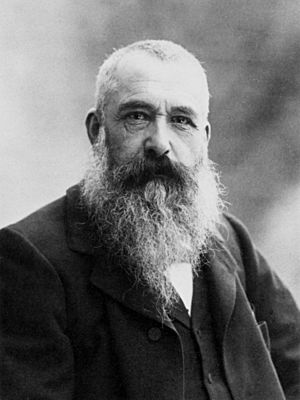 Claude Monet, photograph by Nadar, 1899. | |
| Born | Oscar-Claude Monet (1840-11-14)14 Nov 1840 Paris, France |
| Died | 5 Dec 1926(1926-12-05) (aged 86) Giverny, France |
| Nationality | French |
| Known for | Painter |
| Notable work | Impression, Sunrise Rouen Cathedral serial London Parliament serial H2o Lilies Haystacks Poplars |
| Movement | Impressionism |
| Patron(s) | Gustave Caillebotte, Ernest Hoschedé, Georges Clemenceau |
Oscar-Claude Monet ( xiv November 1840 – five December 1926) was a founder of French Impressionist painting, and the virtually consistent and prolific practitioner of the move's philosophy of expressing 1's perceptions before nature, especially as applied to landscape painting.
The term "Impressionism" is derived from the title of his painting Impression, soleil levant (Impression, Sunrise), which was exhibited in 1874 in the first of the contained exhibitions mounted by Monet and his associates.
Monet's appetite of documenting the French countryside led him to prefer a method of painting the aforementioned scene many times in order to capture the changing of light and the passing of the seasons.
Monet was born in Paris, French republic. His father wanted him to help run the family'due south grocery business organization. All the same, Monet wanted to be an artist. When he was immature he met the painter Eugène Boudin who taught him to utilize oil paints, and encouraged him to paint out of doors.
Monet joined the French Army in Algeria for ii years from 1860-1862. When he became ill he left the army to study art at university. He did not like the fashion art was taught, and joined the painter Charles Gleyre in his studio. He met other artists here, including Pierre-Auguste Renoir and Alfred Sisley. They shared their ideas about painting.
On 1 Apr 1851, Monet entered Le Havre secondary school of the arts. Locals knew him well for his charcoal caricatures, which he would sell for ten to twenty francs.
In 1866 Monet had a kid with Camille Doncieux, who had been his model. They married in 1870. In 1870 he moved to England to escape the Franco-Prussian War, and in 1871 he moved to Argenteuil near Paris where he painted some of his most famous pictures. In 1873 he painted Impression, Sunrise, showing the sea at Le Havre. When this picture show was shown in 1874 one critic took its title and called the grouping of artists "Impressionists". He intended to brand fun of the artists, but the name has stuck and this is what people today telephone call this fashion of painting.
In 1879 Camille died of tuberculosis. Alice Hoschedé decided to assist Monet by taking care of his children as well as her ain. In 1883 they moved to a business firm in Giverny where Monet planted a large garden. Monet married Alice in 1892.
Monet's methods
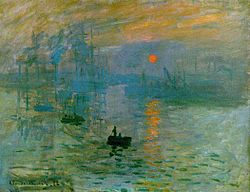
Impression, Sunrise, 1873
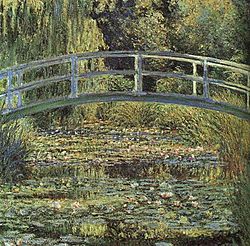
Waterlilies, painted by Monet in his garden at Giverny in 1899
Monet has been described equally "the driving forcefulness behind Impressionism". Crucial to the fine art of the Impressionist painters was the understanding of the furnishings of low-cal on the local color of objects, and the furnishings of the juxtaposition of colours with each other. Monet'south long career as a painter was spent in the pursuit of this aim.
Monet plant that his garden inspired him to pigment pictures of it, particularly the water lilies. Alice died in 1911, and his son Jean was killed in Globe War I in 1914.
Monet used broad brush strokes to build up his pictures, and painted quite chop-chop to try and become the idea of the low-cal he could see into his paintings. If you go very close to one of his pictures information technology is hard to see what it shows, just if y'all stand up dorsum everything becomes clear.
His later paintings include series, in which he paints the aforementioned subject in different lights. For example, he painted a series of pictures of haystacks in a field, and another series of pictures of the west front end of Rouen Cathedral.
Death
Monet died of lung cancer on five Dec 1926 at the historic period of 86 and is buried in the Giverny church cemetery. Monet had insisted that the occasion be simple; thus only about fifty people attended the anniversary.
His dwelling, garden, and waterlily pond were bequeathed past his son Michel, his simply heir, to the French Academy of Fine Arts (office of the Institut de France) in 1966. Through the Fondation Claude Monet, the house and gardens were opened for visits in 1980, following restoration. In addition to souvenirs of Monet and other objects of his life, the firm contains his collection of Japanese woodcut prints. The house and garden, along with the Museum of Impressionism, are major attractions in Giverny, which hosts tourists from all over the globe.
- impressionism
Images for kids
-
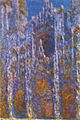
Rouen Cathedral in forenoon sun
-
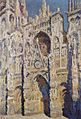
Rouen Cathedral in radiant sunday
-
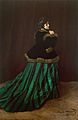
The Woman in the Green Dress, Camille Doncieux, 1866, Kunsthalle Bremen
-
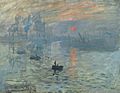
Impression, Sunrise (Impression, soleil levant), 1872; the painting that gave its name to the style. Musée Marmottan Monet, Paris
-
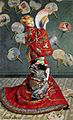
Madame Monet in a Japanese kimono, 1875, Museum of Fine Arts, Boston
-
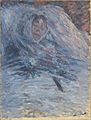
Claude Monet, Camille Monet on her deathbed, 1879, Musée d'Orsay, Paris
-
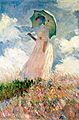
Study of a Figure Outdoors: Adult female with a Parasol, facing left, 1886. Musée d'Orsay
-
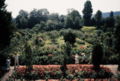
Monet's Garden 1989
-
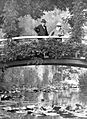
Monet, right, in his garden at Giverny, 1922
-
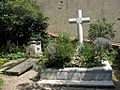
Monet family grave at Giverny
-
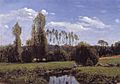
View at Rouelles, Le Havre 1858, Private collection; an early work showing the influence of Corot and Courbet
-
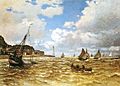
Mouth of the Seine at Honfleur, 1865, Norton Simon Foundation, Pasadena, CA; indicates the influence of Dutch maritime painting.
-
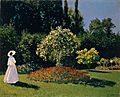
Adult female in a Garden, 1867, Hermitage, Leningrad; a study in the effect of sunlight and shadow on color
-
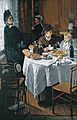
The Luncheon, 1868, Städel, which features Camille Doncieux and Jean Monet, was rejected past the Paris Salon of 1870 but included in the first Impressionists' exhibition in 1874.
-
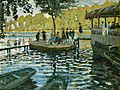
La Grenouillére 1869, Metropolitan Museum of Fine art, New York; a modest plein-air painting created with broad strokes of intense colour.
-
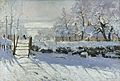
The Magpie, 1868–1869. Musée d'Orsay, Paris; 1 of Monet's early attempts at capturing the effect of snow on the landscape. See also Snow at Argenteuil.
-
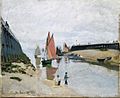
Le port de Trouville (Breakwater at Trouville, Depression Tide), 1870, Museum of Fine Arts, Budapest.
-
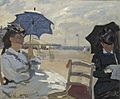
La plage de Trouville, 1870, National Gallery, London. The left figure may be Camille, on the right mayhap the wife of Eugène Boudin, whose beach scenes influenced Monet.
-
-
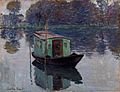
The Studio Boat, 1874, Kröller-Müller Museum, Otterlo, Netherlands
-
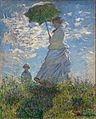
Woman with a Parasol - Madame Monet and Her Son, 1875
-
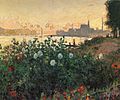
Flowers on the riverbank at Argenteuil, 1877, Pola Museum of Art, Japan
-
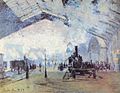
Saint Lazare train station, Paris, 1877, The Fine art Institute of Chicago
-
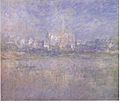
Vétheuil in the Fog, 1879, Musée Marmottan Monet, Paris
-
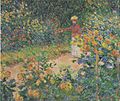
In the Garden, 1895, Collection E. G. Buehrle, Zürich
-
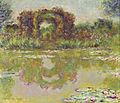
The rose arches, Giverny, 1913, individual collection
-
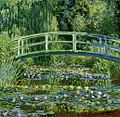
Water Lilies and the Japanese bridge, 1897–99, Princeton Academy Fine art Museum
-
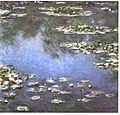
-
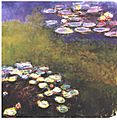
Water Lilies, Musée Marmottan Monet
-
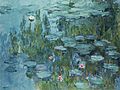
Water Lilies, c. 1915, Neue Pinakothek, Munich
-
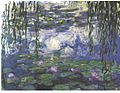
Water Lilies, c. 1915, Musée Marmottan Monet
-
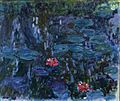
Water Lilies and Reflections of a Willow (1916–19), Musée Marmottan Monet
-
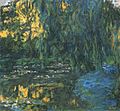
H2o-Lily Pond and Weeping Willow, 1916–1919, Sale Christie'southward New York, 1998
-
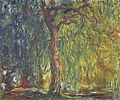
Weeping Willow, 1918–1919, Kimball Art Museum, Fort Worth, Monet's Weeping Willow paintings were an homage to the fallen French soldiers of World War I
-
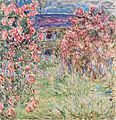
House Amongst the Roses, between 1917 and 1919, Albertina, Vienna
-
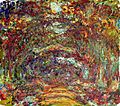
The Rose Walk, Giverny, 1920–22, Musée Marmottan Monet
-
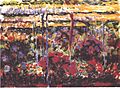
The Garden at Giverny
-
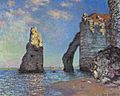
The Cliffs at Etretat, 1885, Clark Constitute, Williamstown
-
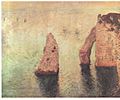
Sailboats behind the needle at Etretat, 1885
-
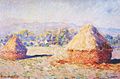
Two paintings from a series of grainstacks, 1890–91: Grainstacks in the Sunlight, Morning Event,
-
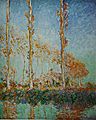
Poplars (Autumn), 1891, Philadelphia Museum of Art
-
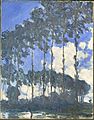
Poplars at the River Epte, 1891 Tate
-
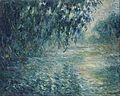
Forenoon on the Seine, 1898, National Museum of Western Art
-
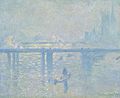
Charing Cross Bridge, 1899, Thyssen-Bornemisza Museum Madrid
-
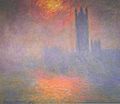
London, Houses of Parliament. The Lord's day Shining through the Fog, 1904, Musée d'Orsay
-
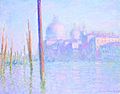
Chiliad Canal, Venice, 1908, Fine Arts Museums of San Francisco
-
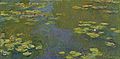
Le Bassin Aux Nymphéas, 1919. Monet'south late serial of Waterlily paintings are amongst his best-known works.
-
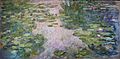
-
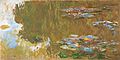
The H2o Lily Pond, c. 1917–xix, Albertina, Vienna

All content from Kiddle encyclopedia articles (including the article images and facts) can exist freely used under Attribution-ShareAlike license, unless stated otherwise. Cite this article:
Claude Monet Facts for Kids. Kiddle Encyclopedia.
pickeringfratirld.blogspot.com
Source: https://kids.kiddle.co/Claude_Monet
0 Response to "What Is in the Impressionist Section of the Chicago Art Institute"
Publicar un comentario